Kategori

What is a wafer Butterfly Valve? Complete Guide

Welcome to the Butterfly Valve Types Series from Laux Valve. This multi-part series provides a comprehensive technical reference for engineers, procurement professionals, and valve specifiers who need to understand the differences between butterfly valve configurations and select the right type for their application. Each article in this series is designed as a standalone reference. we dive deep into the most common butterfly valve configuration: the wafer butterfly valve.
Jul 7th,2026 1 Tampilan

1. What is a Wafer Butterfly Valve?

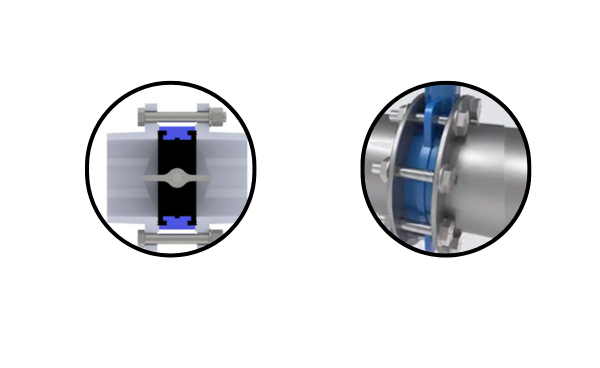
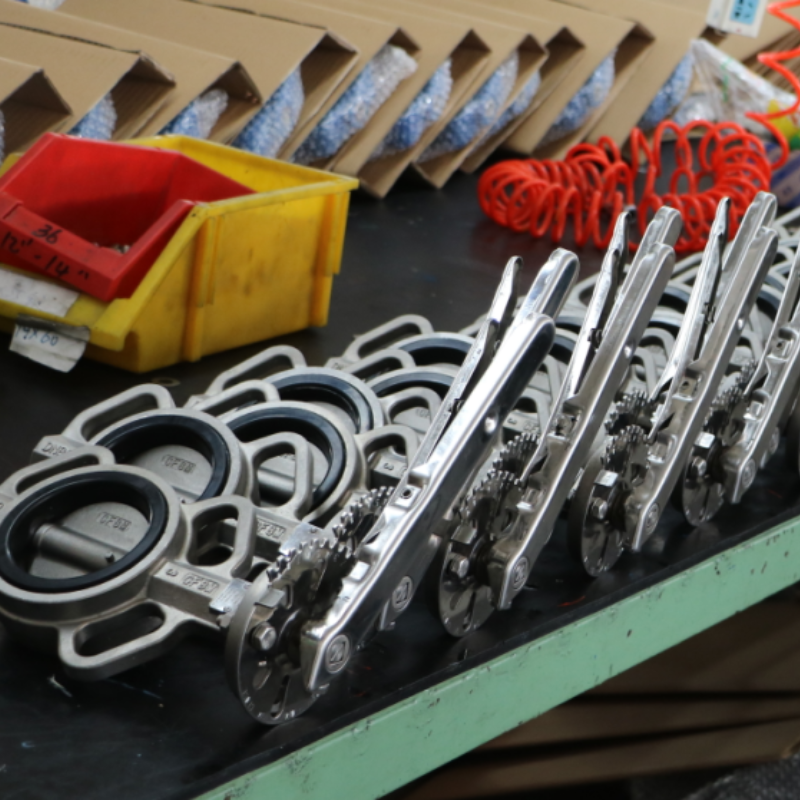
wafer butterfly valve is a butterfly valve with a compact, short-face body that is designed to be clamped between two pipe flanges. Unlike lug-type or double-flanged valves, the wafer valve has no threaded lugs or integral flanges of its own. Instead, the pipe flange bolts pass through alignment holes or slots in the valve body, centering and clamping the valve securely in place.

The wafer design is the most economical butterfly valve configuration and accounts for the majority of butterfly valves installed worldwide. Its simple construction, light weight, and low cost make it the default choice for isolation and throttling service in continuous pipeline systems.

2. Key Characteristics

2.1 Body Design

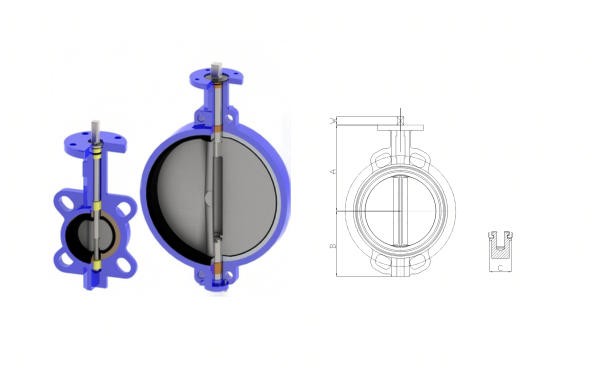
  • Short face-to-face dimension – The wafer body has the shortest end-to-end length of any butterfly valve type. 
  • Through-bolt alignment holes – Smooth holes or slotted openings that align with pipe flange bolt holes for centering and clamping.
  • Alignment ridges (flange registers) – Concentric raised rings on both faces that center the valve within the flange bolt circle.
  • No threaded lugs or integral flanges – The body relies entirely on the mating pipe flanges for mechanical retention.


2.2 Seat Design

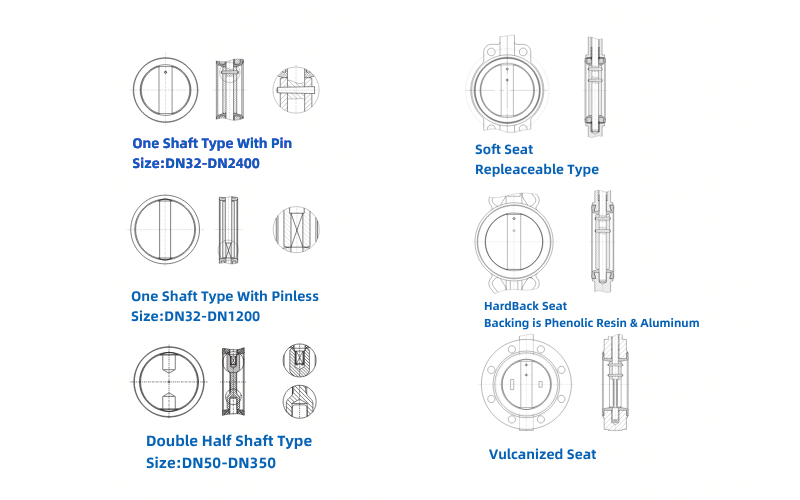
Wafer butterfly valves use resilient (elastomer) seats. Two common constructions:

  • Vulcanized (bonded) seat – Rubber chemically bonded to body during high-temperature vulcanization. Cannot shift, extrude, or blow out. Standard for AWWA C504 waterworks valves.
  • Cartridge (replaceable) seat – Separate rubber liner mechanically retained in the body. Field replaceable, common in economy-grade valves.

Seat Material Selection Guide:

  • Seat Material

    Typical Applications

    Temperature Range

    EPDM

    Water Supply • Wastewater • HVAC • Municipal Water

    14°F to 230°F (-10°C to 110°C)

    NBR

    Oil & Gas • Fuel • Air Compressors • Hydraulic Systems

    14°F to 176°F (-10°C to 80°C)

    FKM(Viton®)

    Chemical Plants • Petrochemical • High Temperature Service

    5°F to 356°F (-15°C to 180°C)

    Silicone

    Food & Beverage • Pharmaceutical • Clean Air Systems

    14°F to 320°F (-10°C to 160°C)

    PTFE

    Chemical Processing • Acid Pipelines • Corrosive Media

    14°F to 356°F (-10°C to 180°C)

    Hapalon

    Chemical Industry • Chlorine Systems • Outdoor Service

    14°F to 176°F (-10°C to 80°C)


    2.3 Disc and Stem

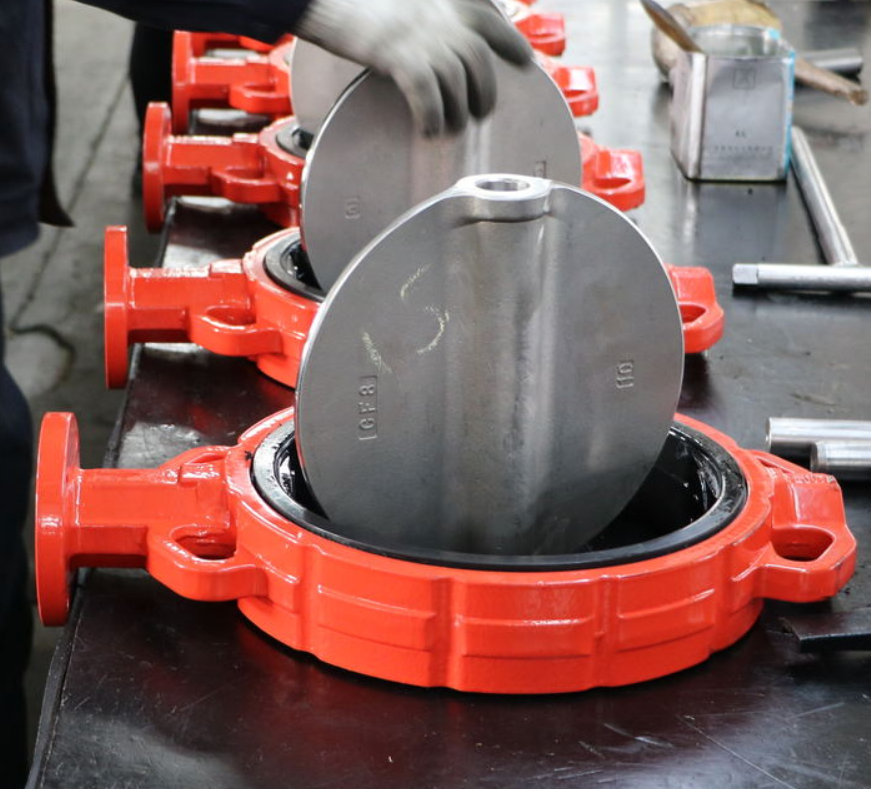
    • Disc – Ductile iron (ASTM A536), nylon 11 coated DI, 316 SS (CF8M), Al-Bronze (C95800), or Duplex SS (1.4469). Precision-machined edge for consistent seat interference.
    • Stem – One-piece blowout-proof design with bronze or PTFE-lined  FRP bearings. Materials: 13% Cr SS, 316 SS, or 17-4 PH. Field-replaceable stem seals.
    • Disc-to-stem connection – Square drive, hex drive, or pinned connection for reliable torque transmission.


    3. How a Wafer Butterfly Valve Works

    The wafer butterfly valve operates on a simple quarter-turn (90 deg) principle:

    Position Disc Angle Flow Condition
    Closed 0 deg (perpendicular) Disc pressed against seat – bubble-tight shut-off
    Throttling 15 deg to 75 deg Proportional flow control – equal-percentage characteristic
    Fully Open 90 deg (parallel) Disc edge-on to flow – minimal pressure drop

    When closed, the disc is perpendicular to the pipe axis, compressing the disc edge against the resilient seat around the full 360 deg circumference. When the operator rotates the stem 90 degrees, the disc aligns parallel with the pipe wall, allowing fluid to pass with minimal obstruction.
    4. Installation Requirements

    Two flanges required – Must be installed between two mating pipe flanges. Flange bolts pass through the valve body to clamp it.
    Sufficient bolt length – Bolts must be long enough to pass through both flanges and the valve body with adequate thread engagement.
    Flange alignment – Both flanges must be parallel and properly aligned. Misalignment can pinch the body, causing high torque or seat damage.
    Disc partially open – Rotate disc to 10-20 deg open during installation to prevent seat compression.
    Centering – Use alignment ridges to center the valve before tightening bolts.
    Star pattern torquing – Tighten flange bolts in a star/cross pattern in multiple passes for even compression.


    5. Advantages and Limitations

    Advantages

    • Lowest cost – 25-40% less expensive than lug or double flange types. Minimum material usage and simpler casting.
    • Lightest weight – 30-50% lighter than equivalent lug valve. Reduces pipe support and installation labor.
    • Shortest face-to-face – Most compact installation footprint. Saves space in congested piping systems.
    • Low pressure drop – Cv values 20-30% higher than gate valves of the same size.
    • Quarter-turn operation – Fast manual or actuated operation with simple actuator integration (ISO 5211).
    • Bi-directional sealing – Bubble-tight shut-off in both flow directions with vulcanized seat.

    Limitations

    • No dead-end service – Cannot be used at pipe ends. Valve body is not retained without a downstream flange. For dead-end isolation, use a lug butterfly valve (Part 2).
    • Both flanges must be unbolted – Maintenance requires draining adjacent pipeline on both sides.
    • Flange alignment critical – Misalignment causes high torque, seat wear, or leakage.

    6. Common Applications

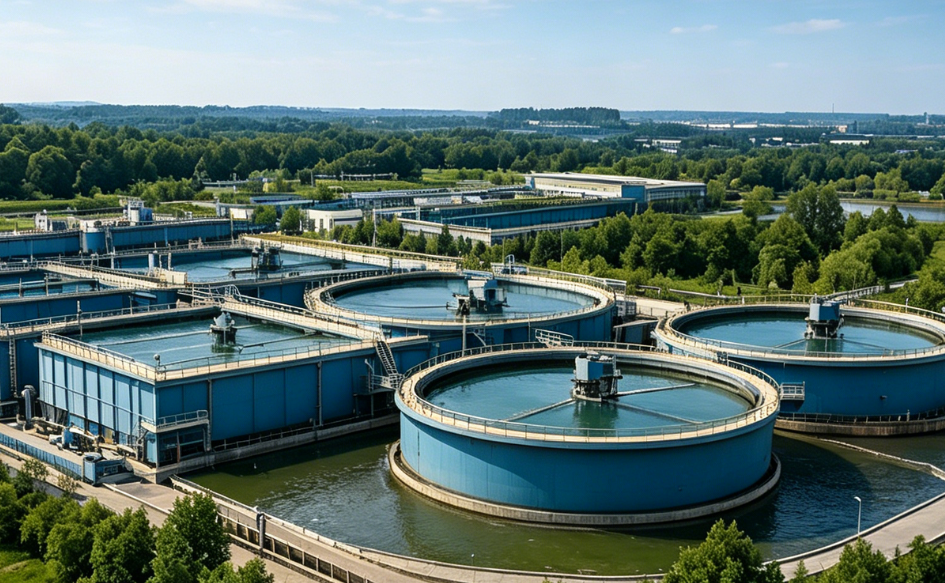
    6.1 Water Treatment and Distribution

    Filter bank isolation, chemical dosing lines, backwash piping, clearwell outlet control, and distribution main sectionalizing. Fusion-bonded epoxy coating and EPDM seat provide potable water compliance (NSF/ANSI 61 certified).

    6.2 HVAC and Chilled Water Systems

    Chiller plant supply/return headers, cooling tower circuits, condenser water loops, and variable flow distribution. Lever-handled valves for quick manual isolation, actuated valves for BMS integration.

    6.3 Fire Protection Systems

    Sectional control valves in fire sprinkler systems and standpipe risers. UL/FM listed options available. Low pressure drop is advantageous in gravity-fed fire water systems.

    6.4 Industrial Process Water

    Cooling water supply and return, compressed air lines, low-pressure steam, process water make-up, and wash-down stations in manufacturing and industrial plants.


    7. Industry Standards

    Standard Relevance to Wafer Valves
    API 609 Category A Concentric butterfly valves for industrial service
    AWWA C504 Rubber-seated butterfly valves for waterworks
    EN 593 European standard for all butterfly valve types
    EN 558 Series 20 Face-to-face dimensions for wafer valves (short)
    ISO 5752 Series B International face-to-face standard for wafer valves

    8. Wafer vs Lug vs Double Flange

    The table below summarizes key differences. See dedicated articles in this series for detailed guidance.

    Criteria Wafer (This Article) Lug (Part 2) Double Flange 
    Cost Lowest +15-25% +30-50%
    Dead-End Service Not suitable Suitable Suitable
    Pipe Removal Both sides unbolted Downstream removable Valve removable alone
    Pressure Class 150-300 Class 150-300 Class 150-600+
    Face-to-Face Shortest Short Longest
    Weight Lightest Moderate Heaviest

    9. Selecting the Right Wafer Butterfly Valve

    1. Confirm wafer type is appropriate – Need dead-end? Switch to lug. Pressure > Class 300? Consider double flange.
    2. Size and pressure class – Match pipe and system. Class 150 / PN10/PN16 covers 90% of wafer applications.
    3. Seat material – Based on fluid and temperature. EPDM for water, NBR for oil, Viton for chemicals.
    4. Disc material – DI (standard), nylon-coated, 316 SS, Al-Bronze, or Duplex for aggressive service.
    5. Operator type – Lever (2-12 in), gear (8-48 in), pneumatic or electric actuator.
    6. Flange standard – ASME B16.5, EN 1092-2, AS 4087, or JIS B2220.
    7. Certifications – NSF 61 / WRAS, UL/FM, CE/PED, FDA as required.

    10. Frequently Asked Questions

    What is the difference between a wafer and lug butterfly valve?

    A wafer valve has through-holes for flange bolts and requires both flanges for clamping. A lug valve has threaded inserts on both body sides allowing independent bolting and dead-end service. See Part 2 of this series for a complete comparison.

    Can a wafer butterfly valve be used at the end of a pipe?

    No. Without a downstream flange, the valve body is not mechanically retained and can slide out under system pressure. For pipe-end or dead-end installations, specify a lug type butterfly valve.

    Do wafer butterfly valves require gaskets?

    Many wafer butterfly valves have integral elastomer sealing surfaces on both body faces that serve as flange gaskets. However, for higher pressure classes, worn flange faces, or certain flange finishes, separate gaskets may be recommended. Always follow the manufacturer's installation instructions.

    What is the pressure rating of a wafer butterfly valve?

    Most common: ASME Class 150 (275 psi / 19 bar at 100 F / 38 C). Class 300 (720 psi / 49.6 bar) is available. European ratings: PN10 (10 bar / 145 psi), PN16 (16 bar / 232 psi), PN25 (25 bar / 363 psi).

    Are wafer butterfly valves bi-directional?

    Yes. Concentric resilient-seated wafer valves with vulcanized seats provide bubble-tight shut-off in both flow directions. No flow direction arrow is required during installation.

    What is the maximum size available?

    Commonly manufactured from 2 in (DN50) up to 48 in (DN1200). Above 48 in, double flange butterfly valves are more common due to higher structural loads and torque requirements.

    What operators can be used with a wafer butterfly valve?

    Standard ISO 5211 mounting pad allows lever handles (2-12 in manually operated), gear operators (8-48 in or high torque), pneumatic actuators (double-acting or spring-return), and electric actuators (on-off or modulating with 4-20 mA feedback). All operators are factory-mounted and tested.

    Contact Laux Valve

    For pricing, technical datasheets, dimensional drawings, or engineering assistance selecting the right wafer butterfly valve for your project:

    Email: sales@lauxvalve.com | Tel: +86 18920833829 | Website: www.lauxvalve.com


Our most frequently asked questions

How soon I can get a price quote?

You can get a quick price quote within a few minutes if you are on live chat with one of our sales representatives and a standard price quote takes just 30-45 minutes and you will have an official price quote in your inbox.

What is the minimum quantity I can order?

You can get a quick price quote within a few minutes if you are on live chat with one of our sales representatives and a standard price quote takes just 30-45 minutes and you will have an official price quote in your inbox.

Do you offer product mock before actual production?

You can get a quick price quote within a few minutes if you are on live chat with one of our sales representatives and a standard price quote takes just 30-45 minutes and you will have an official price quote in your inbox.

Can i customize my packaging?

You can get a quick price quote within a few minutes if you are on live chat with one of our sales representatives and a standard price quote takes just 30-45 minutes and you will have an official price quote in your inbox.

What methods do you adopt to keep an endure printing quality that stays unremittingly?

You can get a quick price quote within a few minutes if you are on live chat with one of our sales representatives and a standard price quote takes just 30-45 minutes and you will have an official price quote in your inbox.

How soon I can get a price quote?

You can get a quick price quote within a few minutes if you are on live chat with one of our sales representatives and a standard price quote takes just 30-45 minutes and you will have an official price quote in your inbox.

How soon I can get a price quote?

You can get a quick price quote within a few minutes if you are on live chat with one of our sales representatives and a standard price quote takes just 30-45 minutes and you will have an official price quote in your inbox.